Marianne
Showing posts with label Marianne. Show all posts

Tokarczuk, Olga "Drive Your Plow Over the Bones of the Dead"

2009

(
Polish: Prowadź swój pług przez kości umarłych


Reviewed by Marianne
from Let's Read


I have read one book by Olga Tokarczuk (Primeval and Other Times) when she received her Nobel Prize for Literature. And I wanted to read more by her since then. A bookclub member lent me one now and I read it in more or less one go, it is so exciting. Janina Duszejko is such an interesting character. And the story is starting so quietly, you don't even notice at the beginning that it is a crime story which are not my favourites.

Even though she is the protagonist of the novel, you don't see her as such at the beginning. Janina is a middle-aged, slightly weird woman living in the middle of nowhere in the mountains at the Polish-Czech border where she looks after the summer houses of some rich people. She works with astrology and translates poems by William Blake. She loves animals and she is a conservationist. A remarquable woman.

Where this story leads to, I don't know. But I recommend this book to anyone who is interested in great literature.

From the back cover:

"One of Poland's most imaginative and lyrical writers, Olga Tokarczuk presents us with a detective story with a twist in DRIVE YOUR PLOW OVER THE BONES OF THE DEAD. After her two dogs go missing and members of the local hunting club are found murdered, teacher and animal rights activist Janina Duszejko becomes involved in the ensuing investigation. Part magic realism, part detective story, DRIVE YOUR PLOW OVER THE BONES OF THE DEAD is suspenseful and entertaining reimagining of the genre interwoven with poignant and insightful commentaries on our perceptions of madness, marginalised people and animal rights."


And why the German translation is called "Der Gesang der Fledermäuse" (The Song of the Bats) is still a mystery to me.


Olka Tokarczuk received the Nobel Prize for Literature in 2018 "for her narrative imagination that with encyclopedic passion represents the crossing of boundaries as a form of life".


I contribute to this page: Read the Nobels and you can find all my blogs about Nobel Prize winning authors and their books here.

Original Post on "Let's Read". 

Fosse, Jon "Morning and Evening"

2001

(Norwegian title: Morgon og kveld) 


Reviewed by Marianne
from Let's Read


I had found it after Jon Fosse received the Nobel Prize for literature and then suggested it to the book club. Since we all like to read books by  Nobel Prize winners, it was chosen as one of our books.

I have always loved Nobel laureates; there is hardly ever an author among them that I don't care for. And this last one is just the same. A fascinating story about the life and death of a man. A simple story about the passing of an old hardworking fisherman with a humble life. No embellishments needed, a plain reflection on an ordinary life.

Jon Fosse describes all this so wonderfully, his writing is fantastic. A well deserving winner of this most prestigious award.

This is only a novella, even the German translation has only about 120 pages but it is as big as many large books of 500 pages or more (my favourite stories).

Other readers were happy, as well. So, here are some comments:

"At first the writing-style was very offputting, as i am too literal to enjoy poetry and the roundabout way of writing. But then after half the book, I started to understand it, and really enjoyed how much feeling you could get out of the minimalistic text."

"The ending was just stunning."

"It started off annoying me with the style of writing.. the flow of thought, no punctuation... but then about halfway through I was just in awe of the skilful and atmospheric way the story was told."

"The translation to Swedish was a bit special, though, the translator had left a lot of words in the book that are nowadays considered part of the ancient-swedish, and not in normal use anymore."
To be honest, I didn't realize that until I heard this comment. Yes, some of the wording seemed old fashioned even in German but I just considered that the "Scandinavian way".

From the back cover:

"A child who will be named Johannes is born. An old man named Johannes dies. Between these two points, Jon Fosse gives us the details of an entire life, starkly compressed. Beginning with Johannes's father's thoughts as his wife goes into labor, and ending with Johannes's own thoughts as he embarks upon a day in his life when everything is exactly the same, yet totally different, Morning and Evening is a novel concerning the beautiful dream that our lives have meaning."


Jon Fosse received the Nobel Prize for Literature in 2023 "for his innovative plays and prose which give voice to the unsayable".


Read my other reviews of the Nobel Prize winners for Literature.

Original Post on "Let's Read". 

Ernaux, Annie "The Years"

2008

(French title: Les années) 


Reviewed by Marianne
from Let's Read


As so often, I had never heard of Annie Ernaux before she received the Nobel Prize. And that's why I always eagerly await the awards, in 99% of the case, the choice is excellent.

And it was this time. Annie Ernaux is a little older than me but I could find a lot of her experiences in my life. I think most women born in the middle of the last century share them, no matter where they're from. Maybe that's why I liked this book.

It wasn't at all what I expected. While the author grows up, she compares her life with her country, its politics, its developments, especially for women (always to slow). Her memories are haphazard, always in fragments, like a collage or a scrapbook. She uses the third person singular. I think that makes it easier for us to associate with her story, she doesn't give the impression as if she is just speaking about herself.

So, this is not just a biography about Annie Ernaux' life but a history of France after WWII. And a reminder to reflect on our own lives and what our country has done for us and to us. So I am sure it is also interesting for younger people who would like to hear about the generations before them.

I have not studied French (at university, I have learned it at school and speak it) but taken lots of classes and read a lot about French history and politics, visited the country, have friends there. So, not much was totally new for me. But I still enjoyed learning what history and society did to one single person, how she grew up the way she did and became the woman she is today. I will surely read more by her.

Some comments from the discussion:
  • "Beautiful language and picture of its time. The reading created a feeling of 'participation' or belonging, as she wrote the autobiography mostly in 'we' form.
  • I have read her biographies about her mother and father, and the abortion. With this The Years, I finally understood her writing style. I found it impressive, starting as glimpses of history, flowing, like a movie, and ended as glimpses again, the person grew along with the story also, reflecting her life in different ages, the perspective growing with the story, as she grew, her perspective of the world grew. Adding more and more observations the wider her perspective and reflection became. Much of the historical references and politics I missed. But an excellent brilliant book, for adults with some reflective skills.
  • A subjective culture history. I did not feel connected to the 'we' form of participation she tried to bring to the story, like she was taking power she doesn't have. The history interested me, but pop cultural references were not familiar to me.
  • The modern pop culture and freer availability of products came much earlier in France than in Finland, I felt.
  • The French perspective on Algeria before and in the later parts of the book felt written from a French born person, very one-sided, that turned around in the modern waves of anti-immigration feelings.
  • Language was very dense, containing a lot of information in small space of pages. Interesting to read about how influences from different parts of the world arrived and 'affected' the French population. What political news shocked them, what was passed over. What parts of Europe they observed, Yugoslavia, Eastern Europe, etc. and how the feelings and thoughts about these changed. The travelling, the Euro.
  • It was not an emotional book, but a very verbal one, she kept a distance to her history and feelings from youth, trying to keep neutral. Like a huge amount of source material (her life) summarized into this book, full of specifically chosen sayings and expressions. It made the book a beautiful experience to read or listen to. The translators were also skilled in translating these special sayings.
  • We also discussed listening to audiobooks, how we feel about it, experience it, and how we felt it affected reading this book.
  • It was interesting that she analysed her own book in the end, intention to write the book, how she wrote it, what perspective, etc."

From the back cover:

"Considered by many to be the iconic French memoirist’s defining work and a breakout bestseller when published in France in 2008.

The Years is a personal narrative of the period 1941 to 2006 told through the lens of memory, impressions past and present - even projections into the future - photos, books, songs, radio, television and decades of advertising, headlines, contrasted with intimate conflicts and writing notes from 6 decades of diaries.

Local dialect, words of the times, slogans, brands and names for the ever-proliferating objects, are given voice here. The voice we recognize as the author’s continually dissolves and re-emerges. Ernaux makes the passage of time palpable. Time itself, inexorable, narrates its own course, consigning all other narrators to anonymity. A new kind of autobiography emerges, at once subjective and impersonal, private and collective.

On its 2008 publication in France, 
The Years came as a surprise. Though Ernaux had for years been hailed as a beloved, bestselling and award-winning author, The Years was in many ways a departure: both an intimate memoir 'written' by entire generations, and a story of generations telling a very personal story. Like the generation before hers, the narrator eschews the 'I' for the 'we' (or 'they', or 'one') as if collective life were inextricably intertwined with a private life that in her parents’ generation ceased to exist. She writes of her parents’ generation (and could be writing of her own book): 'From a common fund of hunger and fear, everything was told in the 'we' and impersonal pronouns.'"

Annie Ernaux received the Nobel Prize for Literature in 2022 "for the courage and clinical acuity with which she uncovers the roots, estrangements and collective restraints of personal memory".

Read my other reviews of the Nobel Prize winners for Literature.

Original Post on "Let's Read". 

Pamuk, Orhan "To Look Out the Window"

2008

aka "
Pieces from the View: Life, Streets, Literature" 
(Turkish title: Manzaradan Parçalar: Hayat, Sokaklar, Edebiyat)


Reviewed by Marianne

from Let's Read


An interesting book by Orhan Pamuk in which he discusses many topics. Whether it's his childhood in Istanbul, his family, politics or his job as a writer, literature, art, he simply has something interesting and worth knowing to say about everything.

That is certainly the main reason why this author is one of my favorites. I hope he writes a new novel soon.

Book description (translated from the German copy):

"Whether it's the crumbling plaster of Istanbul houses or the Turkish flag, whether it's his father or the terrifying nature of Dostoyevsky's demons - with Orhan Pamuk everything becomes a complex universe. Pamuk observes coolly and tells moving stories. Autobiographical, narrative, politics, art and literature: his essays are the sum of different and contradictory experiences - an incredible stroke of luck."

As you can see from my Wikipedia link, there is an English title, though I could not find the book. Still, I hope it has been translated into English.

Orhan Pamuk "who in the quest for the melancholic soul of his native city has discovered new symbols for the clash and interlacing of cultures" received the Nobel Prize for Literature in 2006.

Orhan Pamuk received the Peace Prize of the German Book Trade (Friedenspreis) in 2005.

Read my other reviews of the Nobel Prize winners for Literature.

Original Post on Let's Read.

Canetti, Elias "Auto-da-Fé"

1935 

(German title: Die Blendung)


 Reviewed by Marianne
 from Let's Read


What a book! Did I like it? Hm, hard to tell. It is described as grotesk, obscure, weird, … And weird it is.

The book tells the story of Peter Kien, a sinologist and philologist who lives very reclusively in his apartment with his books. He marries his housekeeper but he slides more and more into madness.

Peter's brother Georg is a famous psychologist in Paris. Alerted by one of Peter's acquaintances, he comes to Vienna in order to help but, alas, is not successful.

This is a very complex book that cannot possibly be explained in a few words. Its a book of obsession and criticism, of society at the time but also a warning about what was to come. After all, this was two years after the nazis gained power in Germany and many people, like the author, feared for the future. And they were right, as it turned out.

The meaning of the English title is explained in Wikipedia:
An auto-da-fé was the ritual of public penance carried out between the 15th and 19th centuries of condemned heretics and apostates imposed by the Spanish, Portuguese, or Mexican Inquisition as punishment and enforced by civil authorities. Its most extreme form was death by burning.

The book was first published in English with the title "The Tower of Babel".
The translation of the original titel "Die Blendung" would be translated into "Blinding as a punishment", "Glare", "Deception", or even in the sense of "Verblendung" as "Infatuation". All these words could be used as the title of the book. In the German book description, it is said that "like Joyce's 'Ulysses', 'The Blinding' is a powerful metaphor for the lonely reflective mind's confrontation with reality." Sounds correct to me.

Book Description:

"'Auto-da-Fé' is the story of Peter Kien, a distinguished, reclusive sinologist living in Vienna between the wars. With masterly precision, Canetti reveals Kien's character, displaying the flawed personal relationships which ultimately lead to his destruction.

Manipulated by his illiterate and grasping housekeeper, Therese, who has tricked him into marriage, and Benedikt Pfaff, a brutish concierge, Kien is forced out of his apartment - which houses his great library and one true passion - and into the underworld of the city. In this purgatory he is guided by a chess-playing dwarf of evil propensities, until he is eventually restored to his home. But on his return he is visited by his brother, an eminent psychiatrist who, by an error of diagnosis, precipitates the final crisis...

'
Auto-da-Fé' was first published in Germany in 1935 as 'Die Blendung' ('The Blinding' or 'Bedazzlement') and later in Britain in 1947, where the publisher noted Canetti as a 'writer of strongly individual genius, which may prove influential', an observation borne out when the author was awarded the Nobel Prize for Literature in 1981. 'Auto-da-Fé' still towers as one of the greatest novels of the twentieth century, and Canetti's incisive vision of an insular man battling agianst the outside world is as fresh and rewarding today as when first it appeared in print."

Elias Canetti received the Nobel Prize for Literature in 1981 "for writings marked by a broad outlook, a wealth of ideas and artistic power".

Read my other reviews of the Nobel Prize winners for Literature.  

Original Post on "Let's Read".

Handke, Peter "Storm Still"

 2010


(German title: Immer noch Sturm)


Reviewed by Marianne
from Let's Read

A book about the Slovenian minority in Carinthia. We all know that there are areas everywhere with immigrants from all kinds of other countries, but my knowledge of Austria and its foreigners is quite limited. This novel is described as a play, which I can not quite understand. Admittedly, the story is told by different family members, but there is hardly any exchange.

Either way, this is not an easy book to just follow and then get the hang of.
You have to strain your gray brain cells to be able to follow the author at all. Handke is a very controversial author, and not everyone welcomed his award of the Nobel Prize for Literature. But he has a certain something. You just want to keep reading. And in the decade that has passed since the book was published, not much has changed, in Austria or elsewhere, it rather got rather worse.

From the back cover:

"Peter Handke, a giant of Austrian literature, has produced decades of fiction, poetry, and drama informed by some of the most tumultuous events in modern history. But even as these events shaped his work, the presence of his mother - a woman whose life spanned the Weimar Republic, both world wars, and the postwar consumer economy - loomed even larger.

In Storm Still, Handke’s most recent work, he returns to the land of his birth, the Austrian province of Carinthia. There on the Jaunfeld, the plain at the center of Austria’s Slovenian settlement, the dead and the living of a family meet and talk. Composed as a series of monologues, Storm Still chronicles both the battle of the Slovene minority against Nazism and their love of the land. Presenting a panorama that extends back to the author’s bitter roots in the region, Storm Still blends penetrating prose and poetic drama to explore Handke’s personal history, taking up themes from his earlier books and revisiting some of their characters. In this book, the times of conflict and peace, war and prewar, and even the seasons themselves shift and overlap. And the fate of an orchard comes to stand for the fate of a people."

Peter Handke received the Nobel Prize for Literature in 2019 "for an influential work that with linguistic ingenuity has explored the periphery and the specificity of human experience".

Read my other reviews of the Nobel Prize winners for Literature.

Original Post on Let's Read.

Morrison, Toni "The Bluest Eye"

1970


Reviewed by Marianne

from Let's Read


As always, Toni Morrison has written a fantastic story about the troubles of people who suffer from racism. This is not my favourite book by her (that would be "Beloved") but it is still a great story. We follow the family Breedlove and their friends backwards, to see what they have all been through.

The main character is the little girl that would love blue eyes. While I understand that wish, she wants to be accepted and thinks this is the way to get there, I thought the rest of the story was much more important.

From the back cover:

"Pecola Breedlove, a young black girl, prays every day for beauty. Mocked by other children for the dark skin, curly hair, and brown eyes that set her apart, she yearns
for normalcy, for the blond hair and blue eyes that she believes will allow her to finally fit in. Yet as her dream grows more fervent, her life slowly starts to disintegrate in the face of adversity and strife.
"

Toni Morrison "who in novels characterized by visionary force and poetic import, gives life to an essential aspect of American realityreceived the Nobel Prize for Literature in 1993.

Read my other reviews of the Nobel Prize winners for Literature.

Original Post on Let's Read.

Read more about other books by the author here.

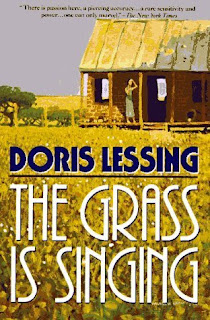
Lessing, Doris "The Grass is Singing"

1950


Reviewed by Marianne

from Let's Read


Doris Lessing's first novel. It received a lot of praise and she was an author of whom much was excepted. She fulfilled it all, her Nobel Prize is a great testimony.

The story takes place in Zimbabwe when it was still called Rhodesia. I guess it could have been any other colony where the white rulers made the black natives their subservients. As we all know, that didn't last forever, it couldn't last forever.

We can see the trouble by looking at some settlers and their problems. Not only did they not know the land and its very own specifics, they were not meant for a climate and a country like this. It had to lead to disaster, one way or another.

Doris Lessing describes the problems very well by looking at Mary, married to a poor farmer, unhappy with her life, not knowing how to improve it. You can tell that she lived in the country herself.

Comments by other members from our book club:
We had a really good discussion about this book and it was scored 4/5 or 5/5 by all.
The writing was excellent in making one see and feel the location and climate. We discussed many topics: the main characters, their psychology and motivations, the time and history and societal pressure for marriage and being the "right kind of white" and pressure to conform to the status quo. Gender roles. Mental health. The different ways of farming the land in the story. The slow gradual changes from outright slavery but not yet really an equal society. And obviously the obsessive and very inappropriate thoughts and behaviour that led to the gruesome end.
I probably forget a lot of aspects, but very interesting.
I again feel older and wiser for having read this book. I might even add some other of her works to my TBR pile.

Book Description:

"Set in South Africa under white rule, Doris Lessing's first novel is both a riveting chronicle of human disintegration and a beautifully understated social critique. Mary Turner is a self-confident, independent young woman who becomes the depressed, frustrated wife of an ineffectual, unsuccessful farmer. Little by little the ennui of years on the farm work their slow poison, and Mary's despair progresses until the fateful arrival of an enigmatic and virile black servant, Moses. Locked in anguish, Mary and Moses - master and slave - are trapped in a web of mounting attraction and repulsion. Their psychic tension explodes in an electrifying scene that ends this disturbing tale of racial strife in colonial South Africa.

'The Grass Is Singing' blends Lessing's imaginative vision with her own vividly remembered early childhood to recreate the quiet horror of a woman's struggle against a ruthless fate."

Doris Lessing "that epicist of the female experience, who with scepticism, fire and visionary power has subjected a divided civilisation to scrutinyreceived the Nobel Prize for Literature in 2007.

Read my other reviews of the Nobel Prize winners for Literature.

Original Post on Let's Read.

Steinbeck, John "Cannery Row"

1945


Reviewed by Marianne
from Let's Read


I have read several John Steinbeck novels and loved them all. With this one, I was expecting something along the line of "The Grapes of Wrath", some story about the people who lived during the Great Depression and how they managed. Instead, I read about a group of unruly people whom I couldn't care for.

I'm sure you have read novels where your thoughts did not stay with the plot. Where you had to go back and read whole paragraphs over and over again. I had this with this story, well, I wouldn't even call it a story. It was an amalgamation of characters who couldn't bring together one decent idea.

I have heard several times that this is a funny novel. I cannot agree with that. I didn't see any humour in it. Sorry.

From the back cover:

"Unburdened by the material necessities of the more fortunate, the denizens of Cannery Row discover rewards unknown in more traditional society. Henri the painter sorts through junk lots for pieces of wood to incorporate into the boat he is building, while the girls from Dora Flood’s bordello venture out now and then to enjoy a bit of sunshine. Lee Chong stocks his grocery with almost anything a man could want, and Doc, a young marine biologist who ministers to sick puppies and unhappy souls, unexpectedly finds true love. Cannery Row is just a few blocks long, but the story it harbors is suffused with warmth, understanding, and a great fund of human values. First published in 1945, Cannery Row focuses on the acceptance of life as it is - both the exuberance of community and the loneliness of the individual. John Steinbeck draws on his memories of the real inhabitants of Monterey, California, and interweaves their stories in this world where only the fittest survive - creating what is at once one of his most humorous and poignant works. In Cannery Row, John Steinbeck returns to the setting of Tortilla Flat to create another evocative portrait of life as it is lived by those who unabashedly put the highest value on the intangibles - human warmth, camaraderie, and love."

John Steinbeck received the Nobel Prize for Literature in 1962 "for his realistic and imaginative writings, combining as they do sympathetic humour and keen social perception".

Read my other reviews of the Nobel Prize winners for Literature.  

Original Post on "Let's Read".

Hemingway, Ernest "To Have and Have Not" - 1937

1937


Reviewed by Marianne
from Let's Read


Some people have it, others don't. Money. That is the main subject of this story. Harry Morgan belongs to the latter category and needs to find ideas to support his family.


Hemingway's love for Cuba is probably the reason for the main setting though this might have taken place in many parts of the world.

I don't think this is the author's greatest book and am glad it wasn't the first one I read. While the story itself is interesting, it goes all a little higgledy-piggledy, especially towards the end. You can't help but wonder whether Mr. Hemingway just wanted to finish this one. Apparently, he considered it his worst one.

He was still a great author.

Comments from the discussion:

  • Most people agreed the characters were not likeable, but we had a lot of thoughts on the settings and time and place in history, as well as about Hemingway's writing style and how it was formed and how it influenced writing of the future.

  • His writing was not really to my taste, nor his characters, I can see how he is well regarded as an author while he just isn't a great fit for me personally. Still I am now able to say I have read something by him, and it will be a good reference point while reading similar genres in the future someday.

We read this in our international online book club in June 2023.

From the back cover:

"Hemingway's Classic Novel About Smuggling, Intrigue, and Love

To Have and Have Not is the dramatic story of Harry Morgan, an honest man who is forced into running contraband between Cuba and Key West as a means of keeping his crumbling family financially afloat. His adventures lead him into the world of the wealthy and dissipated yachtsmen who throng the region, and involve him in a strange and unlikely love affair.

Harshly realistic, yet with one of the most subtle and moving relationships in the Hemingway oeuvre, 
To Have and Have Not is literary high adventure at its finest."

Ernest Hemingway received the Nobel Prize for Literature in 1954 "for his mastery of the art of narrative, most recently demonstrated in 'The Old Man and the Sea' and for the influence that he has exerted on contemporary style".


Read my other reviews of the Nobel Prize winners for Literature.  

Original Post on "Let's Read".

Hamsun, Knut "Growth of the Soil"

(Norwegian title: Markens Grøde) - 1917


Reviewed by Marianne
from Let's Read


So far, I have only read one book by Knut Hamsun, "Pan". That was part of our international book club. One of our members was from Norway, and Knut Hamsun was her favourite author. I liked "Pan", it's a great novel and probably a good one for a book club since it's not too large.

"Growth of the Soil" was just as great. Apparently, this gained him the Nobel Prize for Literature. You can tell that the author loves nature and what it does for us. In this case, Isak, the protagonist, comes to an area where nobody lives and which seems hard to farm. He makes something of it and becomes one of the richest man in the area after some others follow.

It's not just the story, it's the way the people are described, their hard work, their love of nature, their will to become more, also those who don't agree with that style of life.

It's a quiet story, a calming story. An epic story about a time long gone.

From the back cover:

"The epic novel of man and nature that won its author the Nobel Prize in Literature, in the first new English translation in more than ninety years.

When it was first published in 1917, 
Growth of the Soil was immediately recognized as a masterpiece. More than one-hundred years later it still remains a transporting literary experience. In the story of Isak, who leaves his village to clear a homestead and raise a family amid the untilled tracts of the Norwegian back country, Knut Hamsun evokes the elemental bond between humans and the land. Newly translated by the acclaimed Hamsun scholar Sverre Lyngstad, Hamsun's novel is a work of preternatural calm, stern beauty, and biblical power - and the crowning achievement of one of the greatest writers of the twentieth century."


Knut Hamsun received the Nobel Prize for Literature in 1920 "for his monumental work, 'Growth of the Soil'"

Read my other reviews of the Nobel Prize winners for Literature.

Original Post on Let's Read.

Buck, Pearl S. "Portrait of a Marriage" - 1945

1945


Reviewed by Marianne
from Let's Read

Another interesting book by Pearl S. Buck, this time not an Asian story but one that is taking place in the United States and could happen to anyone. It's more a rich man - poor girl relationship but, like any books by Pearl S. Buck, well written. A good insight into marriage, what makes a good one and what doesn't. And still quite valid today, I think.

I have yet to find a book by Pearl S. Buck that I didn't like.

From the back cover:

"At the turn of the century, an upper-class painter from Philadelphia goes searching for inspiration. He finds his muse on a farm - the farmer’s beautiful and humble daughter. His portrait of her becomes one of his most inspired works, but his passion for the illiterate girl doesn’t stop at the easel: He returns to marry her and settle down to country life - a journey that means bridging enormous gaps between their cultures, breaking from his parents, and creating tension between their friends. Pearl S. Buck compassionately imagines both sides of the complex marriage, and in addition, creates a wonderfully vivid picture of America leading up to the Second World War.

Buck follows one woman's journey through a long-term marriage; its romanticized beginning, jolts of disillusionments and losses, and peace through acceptance and faith; as a metaphor for life.
"

Find other books by Pearl S. Book that I read here.

Pearl S. Buck received the Nobel Prize for Literature in 1938 "for her rich and truly epic descriptions of peasant life in China and for her biographical masterpieces".

Read my other reviews of the Nobel Prize winners for Literature.

Original Post on Let's Read.

Martinson, Harry "Aniara - A Review of Man in Time and Space"

 1956


(Swedish title: Aniara: en revy om människan i tid och rum)


Reviewed by Marianne
from Let's Read

I have not read this book as I'm really not into poetry or sci-fi (of which we have read too much lately). The book was available online but I'm not into reading anything from the computer, so it was a double (or even triple) no-no.

So, this post is about the discussion in our book club. The comments are by other members but I thought they might be interesting for some of my blog readers.

The story really surprised me. It had many layers, about human psychology, power-dynamics and coping mechanisms in dystopias, very current themes about the passengers thinking back on how they got to where they are, the devastation of nature and thoughts about the life and death of humanity, while trying to somehow keep from sinking into despair.

The story was meant to portray far into the future, with the main character saying "those to blame for the destruction of humanity are long gone", which made me think that those are us, we who live now.

It was especially surprising in its verses and few different types of poetry rhymes and patterns, really beautiful at parts.

I had expected it to be a lot of action and rushing around in space, but it was the opposite, quiet contemplation, more about the mentality of the last people.

And Martinson had this great sensitive way of not saying much out loud, so we had to read between the lines, for example there must have been a few dozen ways how he described someone dying without actually saying it, or quite beautiful descriptions of how the last of humanity was floating away into space in the sarcophagus named Aniara.

Some normal quotes about it: "it is great, despite it being science fiction" or "the only science fiction worth reading".

Though it definitely took a lot more thinking to follow the story and what was really said, and that it definitely was out of my comfort zone and at moments I was not quite sure if this epic poem was genius or just weird, I would recommend it, it was a reading experience that again widened my reading world.


This was discussed in our international online book club in April 2023.

From the back cover:

"The great Swedish writer Harry Martinson published his masterpiece, Aniara, during the height of the Cold War - right after the Soviet Union announced that it had exploded the hydrogen bomb. Aniara is the story of a luxurious space ship, loaded with 8,000 evacuees, fleeing an Earth made uninhabitable by Man's technological arrogance. A malfunction knocks the craft off course, taking these would-be Mars colonists on an irreversible journey into deep space. Aniara is a book of prophecy, a panoramic view of humanity's possible fate. It has been translated into seven languages and adapted into a popular avant-garde opera."


Harry Martinson received the Nobel Prize for Literature in 1974 "for writings that catch the dewdrop and reflect the cosmos".


Read my other reviews of the Nobel Prize winners for Literature.

Original Post on Let's Read.

Mahfouz, Naguib "Midaq Alley"

1957


(Arabic title: زقاق المدق/Zuqaq El Midaq) - 1947


This is my fifth book by Nobel Prize winning Egyptian author Naguib Mahfouz. And every one of them seems to be even better than the last one. But that's probably just because it's the most recent one. They are all brilliant. He was just such a fantastic writer. You get to know the people living in Midaq Alley as if you've lived among them for most of your life.

A war rages in Europe and makes its waves into Egypt, as well, though not the way we might think.

The alley lies in the poorer part of Cairo with its inhabitants belonging to the poorer population, the lower end of the middle class probably. They all have their dreams of a better life, getting out of the street even though most of them know that this is where they belong and that they might not be able to live anywhere else.

It's almost like living in a village. If someone coughs at one end of the street, people on the other side have you dead within five minutes. Everyone knows everyone else's business. That has its advantages and disadvantages, of course.

So, this story could have taken place elsewhere, maybe even on your doorstep but the author tells us the lives of his compatriots. If you haven't read anything by this author, try him.

From the back cover:

"Never has Nobel Prize-winner Naguib Mahfouz's talent for rich and luxurious storytelling been more evident than in Midaq Alley, in his portrait of one small street as a microcosm of the world on the threshold of modernity. It centers around the residents of one of the hustling, teeming back alleys of Cairo. From Zaita the cripple-maker to Kirsha the café owner with a taste for young boys and drugs, to Abbas the barber who mistakes greed for love, to Hamida who sells her soul to escape the alley, from waiters and widows to politicians, pimps, and poets, the inhabitants of Midaq Alley vividly evoke the sights, sounds and smells of Cairo, Egypt's largest city as it teeters on the brink of change. Long after one finishes reading, the smell of fresh bread lingers, as does the image of the men gathering at the café for their nightly ritual. The universality and timelessness of this book cannot be denied."

Naguib Mahfouz "who, through works rich in nuance - now clear-sightedly realistic, now evocatively ambiguous - has formed an Arabian narrative art that applies to all mankind" received the Nobel Prize for Literature in 1988.

Read my other reviews of the Nobel Prize winners for Literature.

Original Post on Let's Read.

Buck, Pearl S. "Love and the Morning Calm"

1951


Reviewed by Marianne
from Let's Read


Like many of Pearl S. Buck's books, I read this many years ago.
Although the story of the two sisters can be a bit dated, it shows what it's like when two different cultures meet, how people who grow up in one sometimes have a very difficult time fitting into another.

And that is a topic that is more current today than ever before.


From the back cover (re-translated by me):

"They grew up in Korea, the two sisters Deborah and Mary; the active Christianity of their missionary parents and the ancient wisdom teachings of the East formed their world view. When they, one seventeen, the other eighteen years old, arrive in New York,
they appear to their relatives like flowery creatures from another planet, bewildering and alienating - just as they themselves are bewildered and alienated by the strange mysteries that American life throws at them. It is an encounter portrayed with great grace and a humour almost mischievous between East and West, which Pearl S. Buck has made the subject of this little novel. But behind the grace and the mischievousness stands a very serious concern, because the quiet work of the two sisters, carried by selfless concern for the fate of their fellow human beings, in their new environment, like a pure, clear mirror, reveals all the hollow, meaningless nothingness of our own self-centeredness on existence. A story to think about, presented in the most entertaining form."

Pearl S. Buck received the Nobel Prize for Literature in 1938 "for her rich and truly epic descriptions of peasant life in China and for her biographical masterpieces".

Read my other reviews of the Nobel Prize winners for Literature.

Original Post on Let's Read.

Lagerkvist, Pär "Barabbas"

1950


(Swedish title: Barabbas)


Reviewed by Marianne
from Let's Read


Almost a novella, but this novel needs no more pages. We all know Barabbas, the one in whose place Jesus was crucified. But what do we know about him other than his name? Here Pär Lagerkvist thought about what might have happened to Barabbas afterwards.

The story is believable, many early Christians went the way Barabbas goes in the book. There is the wish to believe, the doubt, the inability to come to terms with what happens. Something that still is in every Christian today, I think.

And even if this is not at all what happened to the protagonist, it's an interesting thought to see what could have been.

They even made a film out of the story, Barabbas was portrayed by Anthony Quinn.

From the back cover:

"Barabbas is the acquitted; the man whose life was exchanged for that of Jesus of Nazareth, crucified upon the hill of Golgotha. Barabbas is a man condemned to have no god. 'Christos Iesus' is carved on the disk suspended from his neck, but he cannot affirm his faith. He cannot pray. He can only say, 'I want to believe.'"


Pär Lagerkvist received the Nobel Prize for Literature in 1951 "for the artistic vigour and true independence of mind with which he endeavours in his poetry to find answers to the eternal questions confronting mankind".

Read my other reviews of the Nobel Prize winners for Literature.

Original Post on Let's Read.

Buck, Pearl S. "A Bridge for Passing"

1980


Reviewed by Marianne
from Let's Read


This is arguably one of the author's most personal books. She talks not only about her stay in Japan to witness the shooting of "The Big Wave", but above all about the death of her husband and how she is trying to come to terms with it.

Ultimately, she finds solace in Japan, the people and country are very helpful.

But the story of the film adaptation of her book is also very interesting and probably offered the author some distraction in these difficult times.

From the back cover:

"While in Japan to observe the filming of one of her novels, Pearl Buck was informed that her husband had died. This book is the deeply affecting story of the period that immediately followed - the grief, fears, doubts, and readjustments that a woman must make before crossing the bridge that spans marriage and widowhood."


Find other books by Pearl S. Book that I read here.


Read my other reviews of the Nobel Prize winners for Literature.  

Original Post on "Let's Read".
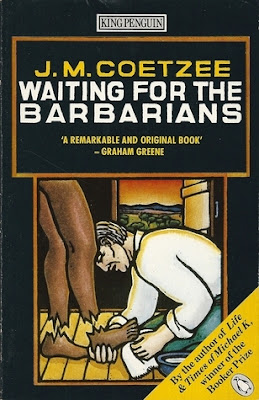
Coetzee, J.M. "Waiting for the Barbarians"

1980


Reviewed by Marianne
from Let's Read


No names or places are mentioned in this novel. So, the story could take place in any corrupt country, in any dictatorship. Since the author is South African, I suppose that's where it takes place.

The description of the protagonist, the magistrate in a small post on the border of "the Empire" is very good. We see how he goes from thinking he is a loyal servant of a fair government to the discovery that the so-called barbarians are oppressed by the regime and those who think they are better than others for whatever reason.

As with so many novels that tell us about these situations, it is quite frightening to think how it is living in such a situation, where already your thoughts are a sin and nobody is supposed to know about it. And beware of helping others, especially if they are on the list of "enemies", "terrorists", "barbarians", whatever they are called in the respective countries.

This book might be more than fifty years old, but it's still as contemporary as ever. I can think of a few countries that are still in a similar situation, and I bet you can, as well.

We read this in our international online book club in January 2023.

Comments by other members:

I thought a lot about the namelessness of them/it all. I found it brutal, and abit difficult to read, as there was so much content in every word. I was not at all fond of the main character either, for being quite self-centered and lazy, (and a bit whiny) thinking one right corrects all wrongs and times he was the enabler.

I was left with questions such as "Why must empires expand?" "Why do empires such as this one pave the way for cruel and ambitious people into places of leadership?" "Where does suspicion come from?" I mean, attack first or else "the others" will attack us" or "cause pain to gain the real truth" or is it a calculated power-move, propaganda, guiding the narrative of the empire to keep expanding and keeping power central. "Who were really the barbarians?".

I enjoyed our discussion about the book a lot.

From the back cover:

"For decades the Magistrate has been a loyal servant of the Empire, running the affairs of a tiny frontier settlement and ignoring the impending war with the barbarians. When interrogation experts arrive, however, he witnesses the Empire's cruel and unjust treatment of prisoners of war. Jolted into sympathy for their victims, he commits a quixotic act of rebellion that brands him an enemy of the state. J. M. Coetzee's prize-winning novel is a startling allegory of the war between opressor and opressed. The Magistrate is not simply a man living through a crisis of conscience in an obscure place in remote times; his situation is that of all men living in unbearable complicity with regimes that ignore justice and decency."

J.M. Coetzee "who in innumerable guises portrays the surprising involvement of the outsider" received the Nobel Prize in 2003 and the Booker Prize for this novel in 1999.

Read my other reviews of the Nobel Prize winners for Literature.  

Original Post on "Let's Read".

Buck, Pearl S. "Kinfolk"

1949


Reviewed by Marianne
from Let's Read


A story that tells us about the question everyone who has lived in a different country asks themselves, especially those that are born in another world than their parents or who moved there when they were little. Do I belong to the country where I live or to the country that my passport shows.

This is a story about a Chinese family in New York who moves "back" to China. My children have lived in different countries all their lives, the youngest wasn't even born in Germany. And while the difference between several European countries is probably not as large as that between countries from different continents, I know they don't exactly feel as belonging to a certain country, they are simply "European".

This is not so easy for the chldren of Dr. Liang, they are American but their ancestors are Asian, and they have to discover the difference between those two countries.

As any of Pearl S. Buck's books, this is a highly interesting book about a culture that is quite foreign to us. But she has depicted it so well, as always. The characters are so alive and every single one of them shows us their life.

From the back cover:

"Kinfolk is the story of a Chinese family. Dr. Liang moves to America in search of a better life, but his children long to return to China. Each responds to their new life in China differently, providing rich insight into the struggles between Eastern and Western culture, and the differences between generations.

A tale of four Chinese-American siblings in New York, and their bewildering return to their roots
In Kinfolk, a sharp dissection of the expatriate experience, Pearl S. Buck unfurls the story of a Chinese family living in New York. Dr. Liang is a comfortably well-off professor of Confucian philosophy, who spreads the notion of a pure and unchanging homeland. Under his influence, his four grown children decide to move to China, despite having spent their whole lives in America. As the siblings try in various ways to adjust to a new place and culture, they learn that the definition of home is far different from what they expected.
"

Find other books by Pearl S. Book that I read here.


Read my other reviews of the Nobel Prize winners for Literature.  

Original Post on "Let's Read".

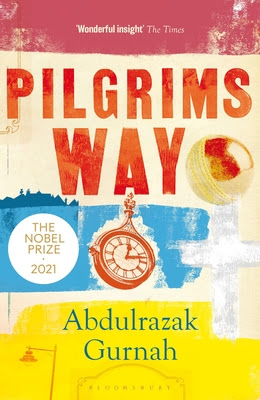
Gurnah, Abdulrazak "Pilgrims Way"

1988


Reviewed by Marianne
from Let's Read


Daud is a Muslim from Tanzania who goes to England in the 70s. He works as an orderly in a hospital, does what thousands of immigrants do, cleans up after the white people. He meets prejudice and racism, the promised land is not what he expected it to be but a return into his home country is impossible.

In this situation he shares his thoughts, his fears, his hopes with us. And that of other immigrants but also the "hosts" which are not always that hospitable, so we better call them the natives.

The author describes an England shortly after the colonial period when they still had to get used to not being the "master race" anymore. I don't just speak about the British Isles, there are people all over the world who still don't understand that.

But, even more, he describes the problems of an immigrant. If you really want to know, read this books.

Oh, one thing he talks about a lot is cricket. I still don't understand it any better.

Book description:

"By the winner of the 2021 Nobel Prize in Literature An extraordinary depiction of the life of an immigrant, as he struggles to come to terms with the horror of his past and the meaning of his pilgrimage to England. Dear Catherine, he began. Here I sit, making a meal out of asking you to dinner. I don't really know how to do it. To have cultural integrity, I would have to send my aunt to speak, discreetly, to your aunt, who would then speak to your mother, who would speak to my mother, who would speak to my father, who would speak to me and then approach your mother, who would then approach you. Demoralised by small persecutions and the squalor and poverty of his life, Daud takes refuge in his imagination. He composes wry, sardonic letters hectoring friends and enemies, and invents a lurid colonial past for every old man he encounters. His greatest solace is cricket and the symbolic defeat of the empire at the hands of the mighty West Indies.Although subject to attacks of bitterness and remorse, his captivating sense of humour never deserts him as he struggles to come to terms with the horror of his past and the meaning of his pilgrimage to England."

Abdulrazak Gurnah received the Nobel Prize for Literature in 2021 "for his uncompromising and compassionate penetration of the effects of colonialism and the fate of the refugee in the gulf between cultures and continents".


Read my other reviews of the Nobel Prize winners for Literature.  

Original Post on "Let's Read".
·
OLDER


© Read the NobelsMaira Gall